鹿鼎记陈小春版
China turns tennis tournaments into tourism magnet as cities package matches with culture, food and city experiences_我的网站

一 | 昨日立秋,但立秋不等于入秋,气象学上要连续5天日平均气温≤22℃才算入秋,杭州离真正的秋天还很远。
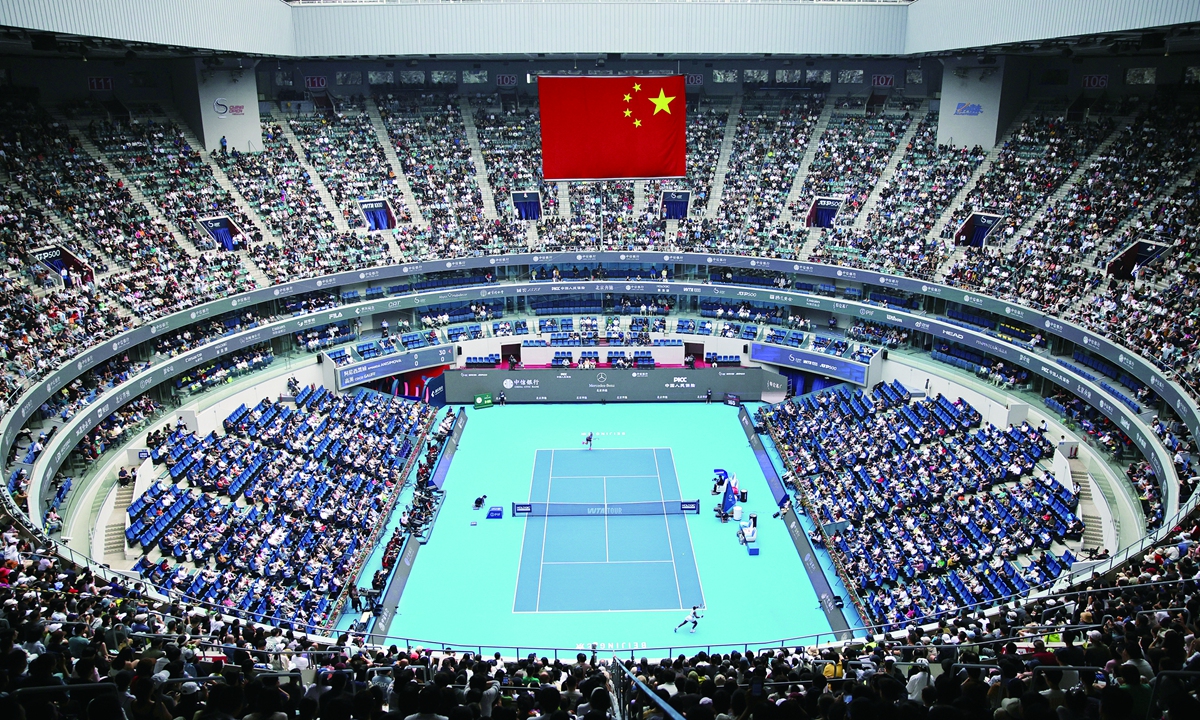
A scene from the women's semifinal at the China Open in Beijing on October 4, 2025 Photo: VCG
As international tennis tournaments multiply across China this autumn, organizers are increasingly looking beyond the court, seeking to turn a trip to a tournament into a broader travel experience.
The 2026 Chinese tennis season, starting in September, will bring a series of international events to cities including Chengdu, Hangzhou and Suzhou besides flagship events in Beijing and Shanghai.
The growing concentration of tournaments is giving Chinese cities a chance to connect sporting events with local consumption, cultural activities and tourism.
Shanghai offers perhaps the clearest example of how that strategy is developing.
In 2025, the Shanghai Masters attracted more than 250,000 spectators, with about 10 percent coming from overseas and 60 percent from outside Shanghai, according to the Shanghai municipal government. The tournament also generated more than 100 million yuan ($14.8 million) in ticket revenue.
The figures have encouraged organizers and city authorities to think beyond the traditional model of selling a ticket to a tennis match.
During this year's Shanghai Masters, ticket packages will include options combining matches with direct transportation, family experiences and visits to other Shanghai attractions, the organizers have announced.
The approach fits into Shanghai's broader effort to use major sporting events to attract international visitors.
The experience in Shanghai suggests that the relationship between tennis and tourism can work in both directions: a tournament brings people to a city, while the city gives spectators reasons to stay longer and spend money beyond the stadium.
For host cities, making tennis more than a sporting event can also serve as a platform for destination marketing, particularly when the event attracts an international audience.
Sports tourism can offer cities something that conventional sightseeing does not, according to tennis commentator Chen Chi.
"Tennis events can activate destinations and build recognizable identities," Chen told the Global Times. "The international player base and global fan following of tennis give host cities an audience well beyond their local audiences, which is widely seen at the Grand Slam events."
The challenge now is to make those visitors stay longer and explore more of the host city. That is where the "ticket plus" model comes in.
Rather than simply asking visitors to buy a match ticket, organizers are increasingly packaging the tournament with hotels, transportation, attractions and other experiences.

Foreign tourists wearing traditional Chinese
hanfu visit Suzhou, East China's Jiangsu Province. Photo: VCG
Culture mattersIn Suzhou, East China's Jiangsu Province, organizers of the WTA 125 Suzhou Open are trying to connect the tournament with the city's existing cultural resources.
Zhou Yunsong, tournament director of the Suzhou Open, said the timing gives spectators an opportunity to combine a tennis trip with a holiday as it partially overlaps with the annual National Day holidays.
"For our spectators, this is a rare opportunity to combine watching tennis with travel. For domestic tennis fans, they don't have to take time off work as they normally would," Zhou told the Global Times.
The tournament venue, the Yangcheng Lake International Tennis Center, is located near several cultural and commercial areas in Suzhou.
The event has also introduced a hotel-and-tennis package, while organizers have arranged cultural experiences for players, including visits to Suzhou's gardens and local cultural venues.
"To give players an immersive experience of Suzhou's charm, we have planned a range of cultural activities, including visits to the Suzhou Museum, tasting authentic Suzhou cuisine, listening to Kunqu Opera, trying on traditional Chinese
qipao and visiting embroidery workshops," Zhou noted.
Zhou sees a broader change in the way people plan trips.
"Traveling to sporting events is becoming a choice for more and more people," he said. "In the past, tourism was about sightseeing - going to a destination, taking photos and checking in. Now, especially among younger generations, people are more inclined to take themed trips."
The idea, he said, is to use the tournament as the starting point for a much wider city experience.
"We hope Suzhou can, with the professional tournament at its core, connect all of Suzhou's tourism resources, including its food, gardens, water towns and shopping, so that visitors can travel around the city for the sake of one match."
Players as ambassadorsFor international tennis, this model has another potential advantage: The players themselves can become part of a city's tourism promotion.
Beijing, for instance, is bringing the players themselves into the tourism story. Li Xuhua, general manager of the China Open, said the tournament plans to give players more opportunities to experience the city.
Current world No.1 Jannik Sinner is among the players who are invited to participate in a hutong (traditional alleyway) tour during his stay in Beijing, Li told the Global Times.
The China Open is also expanding its off-site activities this year.
Li said the tournament will work with the local government to establish more match-watching venues in major commercial areas, allowing people to experience the tournament outside the main tennis center.
"The information from the tennis court can go out and reach people around the city," Li said.
For organizers such as Li, the goal is to make the tournament a broader part of the city's cultural and public life.
"We want this rare tennis carnival to be richer and more colorful, and to give fans more time to experience the appeal of tennis," Li said.
The emerging model is still at an early stage as different event organizers are exploring their own strategies. But the direction is becoming clearer: Tournaments are being used not only to fill seats in stadiums, but also to promote cities as travel destinations.
。不过,受台风“白海豚”影响,持续近一个月的暑热有望得到暂时缓解。截至昨天,杭州从7月14日以来的这波连续高温已达25天。随着“白海豚”的靠近,高温将暂时退场。杭州今天白天阴有阵雨或雷雨,雷雨时局地可伴有短时暴雨和7~9级雷雨大风,夜里阴有中到大雨,白天最高气温34℃。明显的降温从明天开始,杭州最高气温有可能降到30℃以下。昨天省防指将防台风应急响应提升至Ⅲ级,杭州市防指也启动防台风Ⅳ级应急响应。台风将带来风雨影响,提醒大家做好防范,可以做适当的准备:适量备些耐放的食品和饮用水,以备不时之需;花盆、衣架、晾衣杆收到室内,门窗也要检查一下;关注相关部门的预警,尽量少出门。“白海豚”面积相当于13个浙江可能9日下午到10日在我省登陆即将登陆我国的“白海豚”是一个耐力型台风,生成已超10天,经历了5次眼壁置换,3次加强为超强台风。中国天气网气象分析师沈雨旸介绍,从昨天早上的云图上看,“白海豚”结构完整,眼区仍比较清晰,由于有干冷空气卷入,西侧环流减弱,眼区附近出现大片空心区,不过整体环流变得更大了,面积近似13个浙江省那么大。据中央气象台,今年第13号台风“白海豚”(强台风级)的中心昨天20时位于浙江省温州市以东大约660公里的西北太平洋洋面上,就是北纬27.2度、东经127.3度,中心附近最大风力有14级(45米/秒),中心最低气压为950百帕,七级风圈半径为420~450公里,十级风圈半径为220~250公里,十二级风圈半径为100公里。据浙江省气象服务中心昨天的预计,“白海豚”将以每小时10~15公里的速度向偏西方向移动,可能于9日下午到10日早晨在苍南到象山一带沿海登陆(台风级或强台风级,12~14级),登陆后缓慢西行。中国天气网提醒,登陆后,“白海豚”还将深入内陆,给浙江、上海、江苏、福建、江西、安徽、湖北、湖南、河南、山东等十余省份带来风雨影响。为应对“白海豚”带来强降雨可能出现的汛情,水利部7日18时对上海、江苏、浙江、安徽、福建、江西启动洪水防御Ⅳ级应急响应。“白海豚”将给浙江带来5天的降雨明起杭州最高气温有望降至“2字头”浙江省气象服务中心称:受“白海豚”影响,昨天下午起,浙江沿海海面和沿海地区风力逐渐增强至8~10级,昨天夜里至10日增强至10~13级,其中9日白天至10日上午局部13~16级。内陆地区9日至10日大部分地区最大风力8~10级,高山区和江河湖面局部11~12级。这次“白海豚”给我省带来的降雨时间长达5天(7日夜里至12日),强降雨主要集中在8日夜里至10日,东部、南部地区累计雨量大,单点有极端性。预计今天白天沿海部分地区有大到暴雨,局地大暴雨;今天夜里至10日浙中南和沿海地区有暴雨大暴雨,台州、温州和宁波南部局地有特大暴雨;11日浙西部分地区暴雨,局地大暴雨。

二 | 杭州市气象台称,“白海豚”登陆后移速慢、影响时间长,造成的风力影响和“巴威”相当,但降雨比“巴威”更强。预计8日至12日杭州有较明显风雨过程,降雨最强时间段集中在9日至10日。8日白天起全市风力逐渐增大,最强时段出现在9日白天到10日上午,最大东北风平原地区8~10级,山区和江湖水面局地11级以上。携风雨而来的“白海豚”将带来明显降温。浙江省气象服务中心预计,今天起高温开始收敛,9日至12日基本“偃旗息鼓”,届时我省大部分地区最高气温将降至28~30℃。杭州市气象台说,明天开始,“白海豚”的影响趋于明显,气温进一步回落。预计9日至13日,杭州主城区最高气温在28~30℃。
Current article:http://gyt7bh.zhouangnaoguangsundianzhenmou.cfd/list_dnuo/y2k.html
Published on:14:25:59